Content Menu
● Introduction to Powder Coating Systems
● Traditional Powder Coating Controls
>> How Traditional Controls Operate
>> Limitations of Traditional Systems
>> Common Equipment in Traditional Systems
● Smart Control Systems in Powder Coating
>> What Constitutes a Smart Control System?
>> Key Features of Smart Control Systems
● Comparing the Real Advantages
>> Process Consistency and Quality Control
>> Efficiency and Productivity
>> Energy Savings
>> Data-Driven Insights
>> Ease of Maintenance and Troubleshooting
● Challenges and Considerations
>> Implementation Costs
>> Learning Curve
>> Integration Compatibility
>> Cybersecurity Risks
● Case Studies: Practical Benefits in Industry
>> High-Volume Manufacturing
>> Custom/Small Batch Production
● Future Trends in Powder Coating Control Systems
● Frequently Asked Questions (FAQ)
● Conclusion
Powder coating is a widely used finishing process that provides a durable, attractive, and environmentally friendly surface coating on a variety of materials. Over the years, technological advancements have transformed powder coating methods, particularly with the introduction of smart control systems. These innovations promise increased efficiency, improved quality, and enhanced operational control. This article explores the real advantages of smart control systems compared to traditional powder coating controls, analyzing their features, benefits, challenges, and overall impact on the powder coating industry.
Introduction to Powder Coating Systems
Powder coating involves applying a dry powder to a surface, which is then cured under heat to form a protective and decorative finish. Control systems play a crucial role in ensuring consistent coating thickness, desired color, and optimal curing. Traditionally, powder coating controls relied on mechanical and analogue systems, whereas smart control systems incorporate digital technologies, sensors, and advanced software algorithms.
Traditional Powder Coating Controls
How Traditional Controls Operate
Traditional powder coating controls involve manual or semi-automatic settings to manage the coating parameters such as spray gun voltage, powder flow rate, conveyor speed, and curing oven temperature. Operators rely on fixed settings, visual inspections, and experience to adjust these parameters.
Limitations of Traditional Systems
- Manual Adjustments: Operators must frequently intervene to adjust settings, leading to variability.
- Limited Data and Feedback: There is minimal real-time feedback or data collection for process optimization.
- Quality Inconsistency: Variation in coating thickness and finish quality due to human error.
- Inefficient Energy Use: Oven and spray settings may not optimize energy consumption.
- Cumbersome Troubleshooting: Identifying and resolving issues relies on operator observation rather than predictive diagnostics.
Common Equipment in Traditional Systems
- Analog controllers for guns and ovens
- Mechanical flow meters
- Basic conveyor control panels
- Limited automation components
Smart Control Systems in Powder Coating
What Constitutes a Smart Control System?
Smart control systems integrate digital control, sensors, real-time data monitoring, and connectivity for centralized management of the powder coating process. These systems often incorporate IoT (Internet of Things) devices, automated adjustments, and data analytics software.
Key Features of Smart Control Systems
- Automated Parameter Adjustments: Real-time control of spray voltage, powder feed rate, and oven temperature.
- Sensor Integration: Sensors measure coatings thickness, temperature, humidity, and environmental conditions continuously.
- Data Logging and Analytics: Collect and analyze process data for quality control and predictive maintenance.
- Remote Operating Capability: Ability to control and monitor processes remotely via computers or mobile devices.
- Energy Efficiency: Optimization of curing ovens and spray systems reduces power consumption.
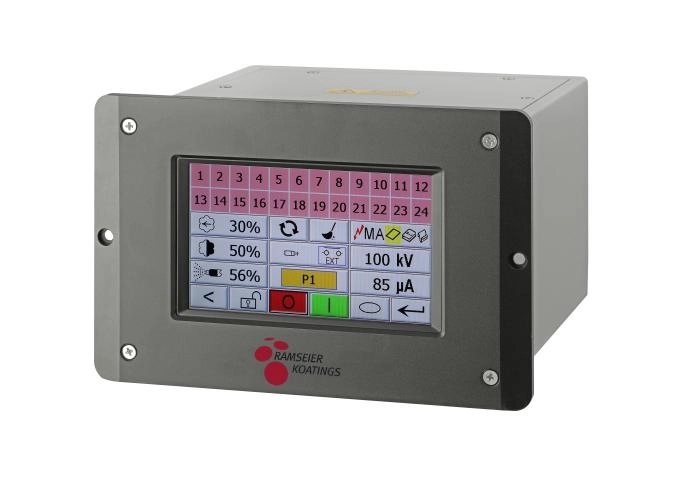
- User-Friendly Interfaces: Touchscreen panels and detailed dashboards simplify operator interaction.
Comparing the Real Advantages
Process Consistency and Quality Control
Traditional systems rely on operator skill, which can result in inconsistencies in coating thickness and finish quality. Smart systems automatically adjust process parameters based on sensor feedback to ensure uniform coatings and fewer defects.
Efficiency and Productivity
Smart systems reduce manual adjustments and downtime by detecting potential issues before they escalate. Automated controls allow for quicker setup and changeover, improving throughput and reducing waste.
Energy Savings
Smart controls optimize industrial ovens by adjusting temperature and curing time dynamically according to real-time data, leading to significant energy savings compared to traditional fixed settings.
Data-Driven Insights
Unlike traditional setups, smart control systems gather detailed process data that can be used for root cause analysis, quality audits, and continuous improvement efforts. This data helps manufacturers fine-tune processes and prevent recurring defects.
Ease of Maintenance and Troubleshooting
Predictive maintenance features alert operators to potential equipment failures, reducing unexpected downtime. Traditional systems require manual inspections and reactive maintenance after a problem occurs.
Challenges and Considerations
Implementation Costs
Smart control systems often require a significant upfront investment for hardware, software, and training, which can be a barrier for smaller operations.
Learning Curve
Operators accustomed to traditional systems may require training and time to adapt to new technologies, impacting short-term productivity.
Integration Compatibility
Upgrading to smart systems may involve compatibility challenges with existing equipment, requiring retrofitting or replacement.
Cybersecurity Risks
With increased connectivity comes the risk of cyber threats, necessitating proper security measures to protect control systems and data.
Case Studies: Practical Benefits in Industry
High-Volume Manufacturing
In facilities with large-scale powder coating operations, smart control systems have demonstrated improvements in throughput, reduction in scrap rates, and better energy management.
Custom/Small Batch Production
Smart controls provide flexibility to switch between different coating requirements rapidly with automated recipe management, which is beneficial for customized production runs.
Future Trends in Powder Coating Control Systems
- AI and Machine Learning: Predictive analytics and automated optimization will become more sophisticated, enabling self-learning systems that continuously improve coating quality.
- Enhanced Connectivity: Integration with broader manufacturing execution systems (MES) and enterprise resource planning (ERP) will enable end-to-end production visibility.
- Sustainability Focus: Smart controls will play a critical role in reducing environmental impact through optimized resource use and consistent finishes reducing reworks.
- Augmented Reality for Maintenance: Future systems may use AR tools for guided maintenance and repairs, reducing downtime further.
Frequently Asked Questions (FAQ)
Q1: Can traditional powder coating controls be upgraded to smart systems without replacing all equipment?
A1: Partial upgrades are possible by retrofitting sensors and controllers, but full integration may require replacing some legacy components.
Q2: How much can energy costs be reduced by switching to smart control systems?
A2: Energy savings vary but can range from 10% to 30%, depending on the existing setup and operational efficiency.
Q3: Are smart control systems suitable for small or artisanal powder coating shops?
A3: While initially more expensive, smart systems offer benefits in quality and efficiency, but smaller operations should assess cost-benefit carefully.
Q4: What kind of data is typically monitored in a smart powder coating system?
A4: Data usually includes coating thickness, spray parameters, oven temperature, humidity, powder consumption, and conveyor speed.
Q5: How do smart control systems enhance operator safety?
A5: By automating hazardous tasks and providing real-time alerts for equipment faults or environmental conditions, smart systems reduce operator exposure to risks.
Conclusion
Smart control systems offer clear technological advantages over traditional powder coating controls, including improved process consistency, energy efficiency, data-driven quality management, and streamlined maintenance. Despite initial costs and implementation challenges, the long-term benefits—particularly for large-scale and complex operations—are significant. The real advantage lies in the overall enhancement of operational control, product quality, and sustainable production, positioning smart controls as the future standard for powder coating industries.
Hot Tags: China, Global, OEM, private label, manufacturers, factory, suppliers, manufacturing company





 CALL US ANY TIME









 Tel: +852 2363 2511
 Fax: +852 2764 0105
 E-mail:

 .
. 