Content Menu
● The vision: what smart data management promises for powder coating
● Data literacy and ownership across teams
● Real-time visibility and standardized data collection
● Integrated control systems and IoT-enabled equipment
● Data quality and governance foundations
● Baseline metrics and a measurable improvement plan
● Data architecture that supports scalability
● Data security and compliance readiness
● Change management and training readiness
● Pilot projects that demonstrate value
● Practical steps to prepare your line for smart data management
● Common challenges and how to overcome them
● The role of leadership in guiding the transition
● Case for incremental value and long-term transformation
● How to assess readiness on a practical checklist
● What success looks like in a mature system
● FAQs
In modern manufacturing, powder coating lines are no longer just a sequence of mechanical steps. They have evolved into data-driven ecosystems where every spray, cure cycle, and part movement can be tracked, analyzed, and optimized. Smart data management enables better quality control, tighter process windows, reduced waste, and faster response to changing production demands. If you're wondering whether your powder coating line is ready for this transformation, the following signs provide a practical guide to assess your current readiness and outline practical steps to progress.
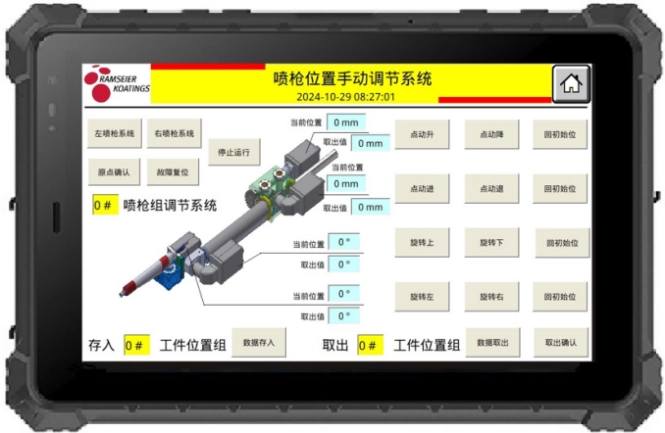
The vision: what smart data management promises for powder coating
Smart data management in a powder coating environment involves collecting accurate data from every stage of the process, integrating it across the plant floor, and turning it into actionable insights. Benefits include improved consistency of coating thickness, reduced defect rates, predictive maintenance for equipment, and more intelligent scheduling that minimizes downtime. The overarching goal is to move from reactive firefighting to proactive optimization, with data guiding decisions.
Data literacy and ownership across teams
A key sign of readiness is that multiple teams—production, quality, maintenance, and engineering—understand the value of data and participate in data-driven improvement efforts. When operators can easily access dashboards, and engineers can trace a defect to its root cause using data, the organization demonstrates a culture that supports smart data management. If data is siloed or ownership is unclear, readiness is likely lagging.
Real-time visibility and standardized data collection
Real-time visibility means operators and supervisors can observe process metrics as they happen, not after the fact. Standardized data collection across shifts and equipment ensures comparability and reliability. If your line lacks centralized data capture, or if data formats vary drastically between machines, you may face steeper integration challenges later. A ready system standardizes sensors, timestamps, and event logging to ensure consistency.
Integrated control systems and IoT-enabled equipment
Smart data thrives when machines speak the same language. Powder coating booths, conveyors, pre-treatment units, baking ovens, and QC stations should be able to exchange data through a common protocol or platform. If your equipment supports IoT, open APIs, or standardized industrial communication protocols, you are better positioned to implement a unified data layer. Conversely, proprietary, isolated control systems can complicate integration.
Data quality and governance foundations
High-quality data is the backbone of any smart data initiative. Look for consistent data capture rules, defined tolerances, and governance policies that address data retention, privacy, and security. If your data has gaps, duplicates, or inconsistent units, the reliability of downstream analytics will suffer. A readiness signal is an established data stewardship role and documented data quality metrics.
Baseline metrics and a measurable improvement plan
An explicit plan with baseline performance metrics helps translate data into value. Identify key performance indicators such as coating thickness uniformity, defect rate, cycle time per part, energy consumption per batch, and preventive maintenance intervals. If your organization already tracks these metrics and sets targets, you're well on the path to smart data management.
Data architecture that supports scalability
A scalable architecture can absorb growing data volumes as production expands or product mixes change. Look for modular data layers, cloud or on-premises storage options, and analytics platforms that can handle batch data, time-series data, and event streams. If your current architecture is monolithic or tightly coupled to legacy systems, modernization may be needed to achieve long-term readiness.
Data security and compliance readiness
Smart data management requires robust security practices to protect sensitive process information and intellectual property. Signs of readiness include role-based access control, encrypted data transmission, secure backups, and explicit compliance with industry standards. If security considerations are only an afterthought, improvements should be prioritized before expanding data collection.
Change management and training readiness
Technology alone doesn't deliver value; people do. Successful adoption requires training, process changes, and ongoing support. If operators and supervisors have not received training on data dashboards, analytics concepts, or data-driven decision making, you may encounter resistance or misinterpretation of data insights. A readiness assessment should include a change management plan and training programs.
Pilot projects that demonstrate value
A concrete sign of readiness is the existence of small-scale pilots that test data-driven improvements on a single line or workstation. Pilots help validate data collection, analytics workflows, and the potential ROI before broader rollouts. If your site has launched or plans to launch such pilots, you're already moving toward full-scale smart data management.
Practical steps to prepare your line for smart data management
If the signs above indicate room for progress, consider the following actionable steps to advance readiness:
- Map data sources: Create an inventory of all data-generating devices, sensors, controllers, and QC instruments on the line. Document data types, units, sampling rates, and ownership.
- Define data standards: Establish a consistent data model and naming conventions. Align timestamps, units, and event definitions to enable reliable cross-system analytics.
- Establish a data hub: Implement a central data repository or data lake that collects, stores, and harmonizes data from disparate sources. Choose a solution that fits your scale and security requirements.
- Choose analytics capabilities: Determine the level of analytics you need, from dashboards and anomaly alerts to predictive maintenance and prescriptive optimization. Select tools that integrate with your data hub and are operable by your teams.
- Implement visualization for operators: Develop intuitive dashboards that present actionable insights at the point of use. Visual cues for out-of-spec conditions help operators respond quickly.
- Prioritize data governance: Assign ownership, establish data quality checks, and define retention policies. Ensure compliance with industry regulations and internal security policies.
- Start with a focused pilot: Choose a process or machine with stable data and clear improvement potential. Run the pilot to validate data flows, analytics, and user adoption before scaling.
- Plan for change management: Develop a training curriculum, schedule hands-on sessions, and provide ongoing support. Include feedback loops to refine dashboards and analytics.
- Measure ROI: Track improvements in coating consistency, waste reduction, energy efficiency, and maintenance costs. Use these metrics to justify further investments.
Common challenges and how to overcome them
Transitioning to smart data management can present challenges. Anticipate these and prepare responses:
- Data fragmentation: Invest in a unified data layer and standardized adapters to consolidate disparate data sources.
- Resistance to change: Engage operators early, demonstrate quick wins, and provide continuous training and support.
- Data gaps: Implement automatic data validation, calibration routines, and maintenance of sensor health to minimize blind spots.
- Integration complexity: Prioritize open standards, scalable architectures, and incremental integrations to reduce risk.
- Security concerns: Enforce strict access controls, encryption, and regular security assessments to protect sensitive data.
The role of leadership in guiding the transition
Executive sponsorship and cross-functional collaboration are critical. Leaders must articulate the business value, allocate resources, and establish a clear roadmap with milestones. A strong governance structure ensures that data initiatives align with production goals and safety requirements.
Case for incremental value and long-term transformation
Smart data management is rarely a single big bang. It delivers incremental value through iterative improvements that compound over time. Early wins in defect reduction or cycle time improvements lay the groundwork for broader enterprise analytics, predictive maintenance, and supply chain synchronization, ultimately making the powder coating line smarter, more resilient, and more competitive.
How to assess readiness on a practical checklist
- Data culture: Do teams routinely discuss data-driven improvements and act on insights?
- Real-time monitoring: Are key process metrics visible in real time, with alerts for deviations?
- System integration: Do machines and control systems share data via compatible protocols?
- Data quality: Is there a documented data quality program and governance?
- Training: Are operators trained to interpret dashboards and respond to alerts?
- Pilot evidence: Have pilots demonstrated measurable benefits?
- Security: Are security policies in place and enforced?
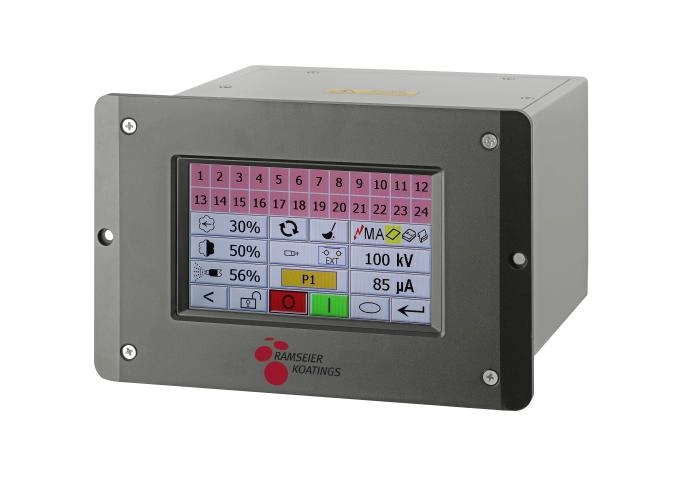
What success looks like in a mature system
A mature smart data management setup for a powder coating line features:
- Consistent coating thickness with reduced variance across batches
- Lower defect rates and quicker root-cause analysis
- Predictive maintenance that minimizes unplanned downtime
- Optimized energy usage and cycle times
- Transparent, actionable dashboards for operators and managers
- Scalable data architecture that supports future expansions
- Strong data governance and security with auditable records
FAQs
- How soon can a powder coating line show value from smart data management? Early benefits can appear within a few months through improved defect detection and process stability, with longer-term gains as analytics mature.
- What are the essential data points to capture in a powder coating line? Key points include coating thickness, curing temperature and time, cycle counts, pass/fail statuses, oven energy consumption, line speed, and sensor health indicators.
- Which technologies are most important for readiness? An IoT-enabled sensor network, a central data platform, and an analytics suite that supports dashboards, alerts, and predictive analytics are foundational.
- How do you address data quality issues? Establish data validation rules, regular sensor calibration, deduplication processes, and ongoing data governance to maintain accuracy.
- What is a practical first pilot project? A pilot focusing on coating thickness uniformity on a single product line can provide measurable improvements and a clear ROI before broader deployment.
Hot Tags: China, Global, OEM, private label, manufacturers, factory, suppliers, manufacturing company





 CALL US ANY TIME









 Tel: +852 2363 2511
 Fax: +852 2764 0105
 E-mail:

 .
. 