Content Menu
● The role of data management in powder coating
● Formulation and pretreatment data integrity
● Process parameterization and real-time monitoring
● Digital inspection and defect tracking
● Calibration, maintenance, and traceability
● Statistical process control and continuous improvement
● Compliance, audits, and supplier management
● Implementing a data management system for powder coating
● Common challenges and mitigations
● Best practices for achieving measurable gains
● Case studies and practical impacts
● A roadmap for future enhancements
● Conclusion
● Related Questions and Answers
Data management has become a critical backbone of modern manufacturing. In the powder coating industry, where finish quality, thickness uniformity, workflow efficiency, and compliance with environmental and safety standards are paramount, robust data management systems (DMS) enable precise control, traceability, and continuous improvement. This article explores how data management systems elevate quality control across the entire powder coating process—from formulation and pretreatment to application, curing, inspection, and final packaging. It also discusses practical implementation strategies, common challenges, and best practices to maximize return on investment.
The role of data management in powder coating
Effective quality control hinges on accurate, timely, and accessible data. A comprehensive DMS collects, stores, analyzes, and disseminates information generated at every stage of the coating process. By providing a single source of truth, the system helps operators, supervisors, quality engineers, and management make informed decisions, reduce variability, and demonstrate compliance to customers and regulatory bodies.
Key capabilities include centralized recipe management, process parameter tracking, real-time monitoring, digital inspection records, calibration and maintenance logs, batch traceability, and automated reporting. When these functions are integrated with equipment like spray booths, ovens, pretreatment lines, and spectrometers, the result is a cohesive quality ecosystem rather than a collection of isolated data silos.
Formulation and pretreatment data integrity
Quality begins with the right powder formulation and surface preparation. A DMS stores formulation histories, particle size distributions, flow properties, and batch-to-batch variations. It also records pretreatment parameters such as cleaning cycles, phosphating, or alkaline cleaning details. By enforcing version control and change management, the system ensures that any formulation or pretreatment tweak is documented, justified, and approved before production runs commence.
Benefits include:
- Reduced risk of coating delamination due to incompatible chemistries.
- Faster detection of batch-to-batch variability sources.
- Clear audit trails for customer specifications or certifications.
Process parameterization and real-time monitoring
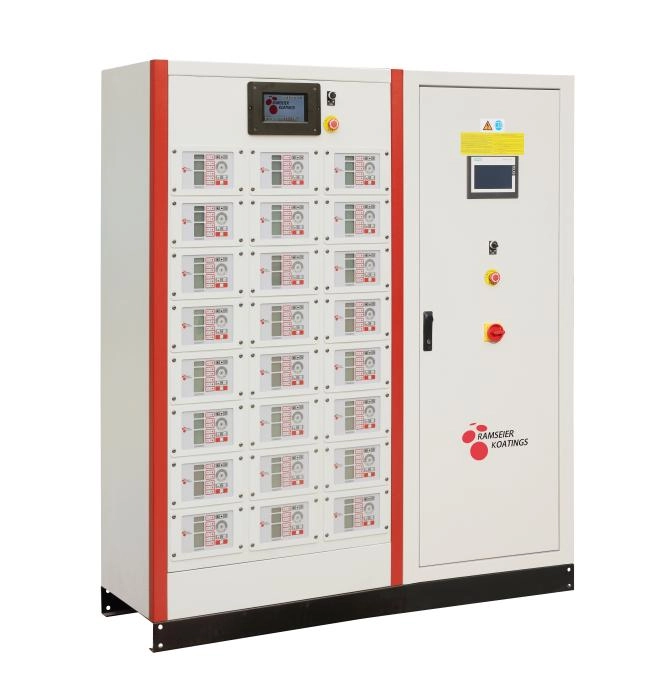
Powder coating quality depends on precise control of multiple parameters: powder feed rate, electrostatic or tribocharging conditions, booth temperature, airflow, humidity, and curing temperature/time. A DMS integrates with sensors, controllers, and human-machine interfaces to collect live data and compare it against target ranges. Operator alerts, trend analyses, and exception reporting help prevent off-spec results before they occur.
Real-time dashboards provide operators with actionable insights, such as:
- Inconsistencies in powder flow that can cause uneven film thickness.
- Temperature drift in the curing oven that may affect cross-linking and gloss.
- Variations in booth airflow that lead to orange-peel or pinhole formation.
Digital inspection and defect tracking
Quality control in powder coating frequently relies on visual inspection and nondestructive testing. A DMS can capture digital inspection records, including gloss measurements, film thickness, adhesion tests, and cure indicators. With standardized checklists and rating scales, inspectors document defects likeRuns, runs, sagging, orange peel, craters, and color variations. By linking these results to specific batches, machines, and operators, the system makes it easier to identify root causes and implement corrective actions.
Advanced imaging and computer vision modules can automatically detect surface defects and classify them according to predefined severity levels. When such data feeds into the DMS, it enables quantitative trend analysis and robust KPIs, such as first-pass yield, reject rate, and mean time between failures.
Calibration, maintenance, and traceability
A powder coating operation relies on the accuracy of scales, meters, gauges, and temperature sensors. The DMS schedules calibration reminders, records certificate numbers, and tracks calibration intervals. It also logs maintenance activities for equipment like the spray guns, booth fans, and ovens. This ensures that all measurement devices remain within specification and that deviations are promptly corrected.
Traceability is a cornerstone of quality management. A DMS assigns a unique identifier to each batch, linking raw materials, pretreatment parameters, process settings, cure conditions, inspection results, and final coating properties. In case of a defect, this linkage enables rapid traceability to the root cause and efficient product recalls if necessary.
Statistical process control and continuous improvement
Data held within a DMS supports statistical process control (SPC) by providing real-time and historical data for control charts, capability analyses, and trend monitoring. Operators can detect shifts in mean or variance, identify assignable causes, and implement corrective actions. Cumulatively, these practices reduce waste, shorten production cycles, and improve throughput without sacrificing quality.
A mature DMS also facilitates continuous improvement by enabling:
- Root cause analysis workflows that connect defects to specific materials, machines, or operators.
- Lessons learned repositories that maintain best practices and standardized operating procedures.
- Cross-functional collaboration through shared dashboards and accessible reports.
Compliance, audits, and supplier management
Powder coating facilities often operate under industry standards such as ISO 9001, IATF 16949, or environmental regulations governing solvent emissions and waste management. A DMS centralizes evidence of compliance, including calibration certificates, process validation records, supplier specifications, and QA test results. The system can also manage supplier performance evaluations, material certificates of conformity, and lot traceability down to individual batches.
During audits, the DMS provides readily retrievable documentation, traceability data, and evidence of corrective actions, which can streamline the audit process and demonstrate a commitment to quality and safety.
Implementing a data management system for powder coating
Successful deployment requires careful planning, stakeholder alignment, and a phased approach. Consider the following steps:
- Define quality objectives and KPIs: Establish measurable targets for first-pass yield, defect rates, cure consistency, and cycle times. Align these with business goals and customer requirements.
- Map data sources and interfaces: Identify all data-generating sources, including powder material data sheets, pretreatment logs, sensor networks, and test equipment. Plan for API-based integrations where possible.
- Design data architecture: Choose a scalable data model that accommodates batch data, parameter histories, inspection results, and maintenance records. Ensure data integrity with validation rules, access controls, and versioning.
- Develop workflows and checklists: Create standardized inspection protocols, deviation management processes, and corrective action workflows. Embed these into the DMS to ensure consistency.
- Roll out in stages: Start with pilot lines or a single facility to validate integrations and user adoption. Use lessons learned to scale across sites.
- Train users and foster ownership: Provide role-based training, emphasize data quality practices, and establish a governance structure that includes data stewards and quality leads.
- Monitor adoption and ROI: Track usage metrics, time-to-resolution for defects, and the financial impact of quality improvements to justify continued investment.
Common challenges and mitigations
- Data silos and integration difficulties: Invest in open APIs and middleware to connect disparate equipment and software. Standardize data formats to simplify mapping.
- Data quality and entry errors: Implement validation rules, mandatory fields, and guided data capture. Use automated data capture where feasible to reduce manual entry.
- Change management: Involve operators early in requirements gathering, provide user-friendly interfaces, and demonstrate quick wins to encourage adoption.
- Security and compliance: Enforce strict access controls, audit trails, and encryption for sensitive data. Regularly review permissions and incident response plans.
- Cost and complexity: Start with high-impact modules like inspection data and SPC, then incrementally add capabilities such as advanced analytics and vision systems as ROI becomes clear.
Best practices for achieving measurable gains
- Standardize data definitions: Create a glossary of terms and data dictionaries to ensure consistency across sites and teams.
- Prioritize data quality at the source: Emphasize correct data capture at the point of origin rather than relying on post hoc corrections.
- Leverage predictive analytics: Use historical data to forecast coating failures or curing deviations, enabling proactive interventions.
- Foster a culture of data-driven decisions: Encourage front-line staff to use dashboards and reports in daily problem solving.
- Align with customers and regulators: Use the DMS to generate traceability reports, material compliance records, and quality certificates as proof of adherence to requirements.
Case studies and practical impacts
- Case study A: A mid-sized coating line implemented a DMS with automated inspection data capture and SPC. Over six months, the first-pass yield improved by a notable margin, and the defect rate decreased by double digits. Production downtime reduced due to proactive maintenance alerts.
- Case study B: A multi-site operation standardized data collection across plants. Centralized analytics enabled cross-site benchmarking, identifying best practices that were shared via standardized work instructions. The result was faster root-cause analysis and more consistent finish quality.
- Case study C: Integration with supplier data and material certificates improved material traceability. In the event of a quality issue, the company could quickly identify affected batches and coordinate corrective actions with suppliers, minimizing risk to customers.
A roadmap for future enhancements
- Advanced analytics and AI-driven optimization: Apply machine learning to optimize powder formulations, predict cure outcomes, and adjust process parameters in real time.
- Enhanced vision and pattern recognition: Deploy high-resolution imaging and AI-assisted defect detection to reduce human error and accelerate inspections.
- Mobile and remote access: Extend the DMS to mobile devices for on-the-floor data entry, real-time alerts, and remote audits.
- Digital twins of coating lines: Create virtual replicas of production lines to simulate changes, plan capacity, and test control strategies without disrupting production.
Conclusion
Data management systems empower powder coating operations to achieve higher consistency, traceability, and efficiency. By integrating formulation data, pretreatment history, process parameters, real-time monitoring, digital inspections, calibration and maintenance records, and supplier information, manufacturers can drive smarter quality control decisions, reduce waste, and deliver reliable finishes to customers. As technology advances, the ongoing evolution of data analytics, automation, and digital twin capabilities will further strengthen the quality backbone of powder coating facilities.
Related Questions and Answers
1. How does a data management system help improve first-pass pass rates in powder coating?
Answer: Through unified parameter monitoring, real-time alerts, standardized checklists, and traceable batch records, the system can detect deviations early in production and quickly correct them, reducing rework and scrap rates.
2. How can data interoperability between different equipment and sites be ensured?
Answer: Using open APIs, unified data formats, and middleware for system integration, and establishing unified data dictionaries and interface standards, ensures a seamless flow of information across all links.
3. How does a data management system help with compliance and audits?
Answer: The system centrally archives calibration certificates, process validation, material specifications, and inspection results, providing a traceable chain of evidence and facilitating the rapid generation of audit and compliance reports.
4. How can the return on investment (ROI) of a data management system be measured?
Answer: ROI can be assessed by tracking changes in key performance indicators such as first-pass yield, defect rate, line downtime, and cost per unit of output, as well as the degree of reporting automation and improved audit efficiency.
5. What advanced features can be introduced in powder coating to further enhance quality control in the future?
Answer: AI-driven optimization, advanced visual inspection, digital twins and predictive maintenance, as well as mobile data collection and remote monitoring to achieve greater automation and faster response times.
Hot Tags: China, Global, OEM, private label, manufacturers, factory, suppliers, manufacturing company





 CALL US ANY TIME









 Tel: +852 2363 2511
 Fax: +852 2764 0105
 E-mail:

 .
. 