Content Menu
● Understanding Powder Sieving in Coating Processes
>> What is Powder Sieving?
>> The Role of Particle Size in Coatings
● Why Powder Sieving Is Critical for Coating Smoothness
>> Ensuring Uniform Particle Size Distribution
>> Elimination of Agglomerates and Contaminants
>> Improved Powder Flowability
● Effects of Sieving on Different Coating Techniques
>> Powder Coating Applications
>> Thermal Spray Coatings
>> Powder Dispersion in Liquid Coatings
● Process Parameters and Sieving Technology
>> Choosing the Right Sieve Mesh Size
>> Vibrating vs. Rotating Sieves
>> Sieving Frequency and Duration
● Impact of Sieving on Coating Quality Metrics
>> Surface Roughness Reduction
>> Film Thickness Uniformity
>> Enhanced Adhesion and Durability
● Best Practices for Optimizing Powder Sieving
>> Dry and Clean Handling Environment
>> Regular Sieving Maintenance
>> Integration with Quality Control
>> Customized Sieving Protocol
● Conclusion
● Frequently Asked Questions (FAQs)
Achieving a flawless and smooth coating finish is a critical goal in industries such as automotive, electronics, appliances, and construction. Among the numerous factors influencing the quality of a coating, powder preparation—which includes the sieving process—plays a pivotal role. Powder sieving is a technique used to separate fine particles from larger agglomerates and impurities to ensure uniform particle size distribution. This article explores how powder sieving impacts the final coating smoothness, analyzing the underlying mechanisms, benefits, process considerations, and best practices for optimizing the coating outcome.
Understanding Powder Sieving in Coating Processes
What is Powder Sieving?
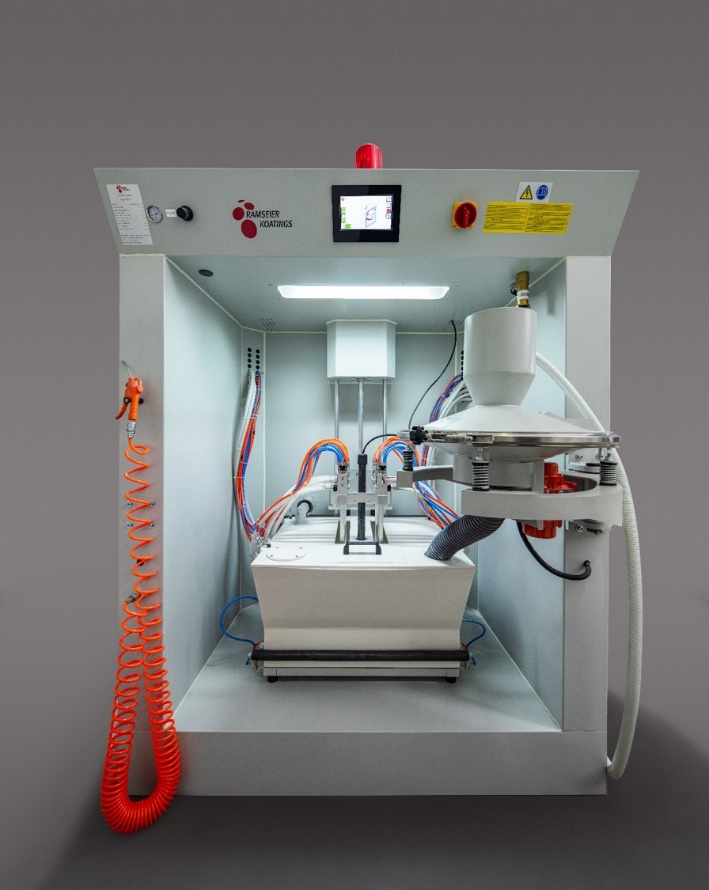
Powder sieving is the process of passing powder particles through a mesh or screen to separate particles based on size. The powder is usually spread over a vibrating or rotating sieve, which allows smaller particles to pass through while retaining larger clumps, contaminants, or foreign materials on the sieve surface.
In powder coating and other coating technologies such as thermal spray or powder dispersion, sieving helps ensure:
- Consistent particle size distribution
- Removal of lumps and agglomerates
- Decreased contamination risks
The Role of Particle Size in Coatings
Particle size directly influences powder flowability, packing density, melting behavior, and adhesion characteristics. Inconsistent particle sizes or oversized particles can lead to uneven application and rough surfaces, ultimately affecting coating smoothness.
Why Powder Sieving Is Critical for Coating Smoothness
Ensuring Uniform Particle Size Distribution
A fundamental benefit of powder sieving is achieving a narrow particle size distribution. Uniform powders:
- Flow evenly during application
- Melt and fuse more uniformly
- Reduce defects such as orange peel or rough textures
Elimination of Agglomerates and Contaminants
Powder agglomerates and foreign particles can cause coating imperfections:
- Raised bumps or craters
- Uneven thickness
- Poor adhesion spots
Sieving effectively removes these problematic particles, creating a cleaner powder feed for the coating process.
Improved Powder Flowability
Sieving reduces clogging and bridging during powder transportation and application. This increases the consistency of powder delivery, which is essential for achieving smooth, even coatings.
Effects of Sieving on Different Coating Techniques
Powder Coating Applications
In electrostatic powder coating, particles are sprayed onto electrically grounded parts. The uniformity and size of these particles influence:
- Charging efficiency
- Transfer efficiency
- Coating thickness uniformity
Sieving ensures powders do not clog spray nozzles and distribute consistently, resulting in smooth surfaces without defects like pinholes or uneven roughness.
Thermal Spray Coatings
For thermal spray processes, such as plasma or HVOF spraying, powder particle size affects particle melting and flattening on the substrate surface. Sieving:
- Removes oversized particles that do not melt fully
- Ensures better particle melting consistency
- Enhances surface finish quality
Powder Dispersion in Liquid Coatings
In powder-dispersed coatings and paints, particle size impacts dispersion stability and film uniformity. Sieving before mixing:
- Facilitates even dispersion
- Prevents sedimentation or agglomerate formation
- Produces a uniform, smooth dried coating
Process Parameters and Sieving Technology
Choosing the Right Sieve Mesh Size
The sieve mesh size should be tailored to the powder specifications and the coating application. Too coarse a mesh allows larger particles that cause unevenness, while too fine a mesh may over-screen powders, wasting usable material.
Vibrating vs. Rotating Sieves
Vibrating sieves are common for finer powders and higher precision sieving. Rotating or centrifugal sieves work well for bulk powders or coarser materials. Using the correct type ensures optimal sieving efficiency.
Sieving Frequency and Duration
Regular sieving during powder handling can maintain quality but excessive sieving may degrade powders. Finding a balance between frequency and duration helps preserve powder integrity while eliminating defects.
Impact of Sieving on Coating Quality Metrics
Surface Roughness Reduction
By ensuring particle uniformity and cleanliness, sieving reduces surface roughness, measured as Ra or Rz values in micrometers. Smoother coatings correlate with better aesthetics, corrosion resistance, and reduced maintenance.
Film Thickness Uniformity
Uneven particles may agglomerate or separate during spraying or dipping, causing thickness variations. Sieving promotes homogeneous layering and consistent film builds.
Enhanced Adhesion and Durability
Clean, uniform powders ensure proper melting and bonding with the substrate, improving mechanical strength, adhesion, and coating lifespan.
Best Practices for Optimizing Powder Sieving
Dry and Clean Handling Environment
Moisture and contamination affect powder flow and sieving efficiency. Use dry, clean conditions to prevent lumps and powder degradation.
Regular Sieving Maintenance
Inspect and maintain sieves regularly to avoid mesh damage or clogging that compromises sieving performance.
Integration with Quality Control
Incorporate sieving with particle size analysis tools like laser diffraction or microscopy for precise monitoring.
Customized Sieving Protocol
Develop protocols based on powder type, coating process, and end-use requirements with input from material scientists and coating experts.
Conclusion
Powder sieving significantly influences the smoothness and overall quality of final coatings. By ensuring consistent particle size distribution, removing agglomerates and contaminants, and improving flow characteristics, sieving optimizes coating application and appearance. Implementing proper sieving methods aligned with coating technology and powder properties contributes to superior surface finishes with enhanced durability and aesthetic appeal. Manufacturers seeking to improve coating performance should prioritize efficient and controlled sieving as a critical step in powder preparation.
Frequently Asked Questions (FAQs)
Q1: How often should powder be sieved in a coating production line?
Powder should be sieved before each application batch or whenever it shows signs of clumping or contamination. Regular but not excessive sieving maintains powder quality.
Q2: Can sieving affect the chemical properties of powder?
Sieving is a physical separation process and does not alter chemical properties, but improper handling during sieving (e.g., moisture exposure) can degrade powders.
Q3: What problems occur if oversized particles are not removed?
Oversized particles can cause surface defects like rough patches, bumps, or poor adhesion, leading to compromised coating performance.
Q4: Is sieving necessary for all types of powder coatings?
While not always mandatory, sieving is highly recommended especially for fine powders or those prone to agglomeration to ensure smooth finishes.
Q5: What is the typical mesh size range used for powder coating sieves?
Mesh sizes between 60 to 120 mesh (250 to 125 microns) are commonly used, but this depends on the specific powder properties and application.
Hot Tags: China, Global, OEM, private label, manufacturers, factory, suppliers, manufacturing company





 CALL US ANY TIME









 Tel: +852 2363 2511
 Fax: +852 2764 0105
 E-mail:

 .
. 