Content Menu
● Understanding Powder Sieves and Automated Coating Lines
>> What Are Powder Sieves?
>> Overview of Automated Coating Lines
● Key Advantages of Integrating Powder Sieves
>> Enhanced Product Quality and Consistency
>> Increased Operational Efficiency
>> Enhanced Worker Safety and Environmental Compliance
>> Flexibility and Integration Compatibility
● Types of Powder Sieves for Automated Coating Lines
>> Vibratory Sieves
>> Rotary Sieves
>> Pneumatic Sieves
● Implementation Best Practices for Powder Sieves in Coating Lines
>> Assess Powder Characteristics
>> Choose the Correct Sieve Size and Material
>> Integrate with Automation Controls
>> Regular Maintenance and Cleaning
● Case Studies: Real-World Benefits of Powder Sieves Integration
>> Case Study 1: Automotive Coatings
>> Case Study 2: Electronics Industry
● Conclusion
● Frequently Asked Questions
>> What types of powders benefit most from sieving in coating lines?
>> Can powder sieves handle wet or sticky powders?
>> How does powder sieving reduce waste in coating processes?
>> Is it difficult to retrofit existing coating lines with powder sieves?
>> How often should powder sieves be cleaned and maintained?
In today's fast-paced manufacturing environment, precision and efficiency are key to maintaining competitiveness. One critical element in automated coating operations is the effective handling and processing of powders. Integrating powder sieves into your automated coating line can transform product quality, operational efficiency, and worker safety. This article explores the myriad benefits of adding powder sieves to your coating line, explaining how this integration improves coating consistency, reduces waste, and ensures compliance with industry standards.

Understanding Powder Sieves and Automated Coating Lines
What Are Powder Sieves?
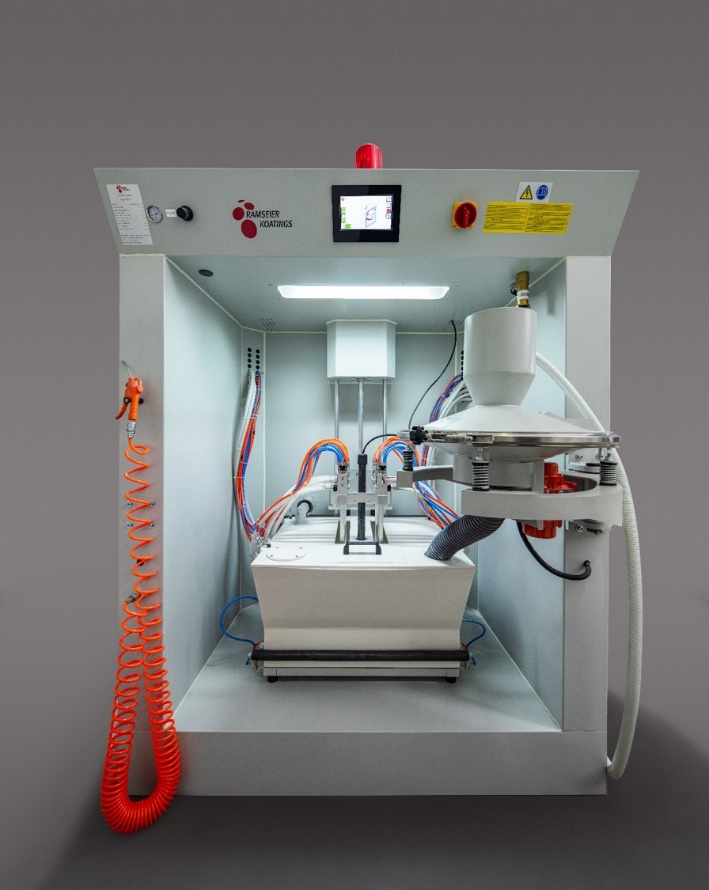
Powder sieves are specialized filtration devices designed to separate and grade powdered materials based on particle size. They use fine screen meshes or vibrating mechanisms to remove oversized particles, agglomerates, and contaminants from powders before they enter the coating process. This separation ensures uniform particle distribution, which is essential in many industrial coatings.
Overview of Automated Coating Lines
Automated coating lines apply protective or decorative coatings to products in a highly controlled, efficient environment. These systems often feature integrated conveyors, spray or powder stations, curing ovens, and quality control checkpoints. Consistency in particle size and powder quality directly influences coating adhesion, finish quality, and process uptime in these automated workflows.
Key Advantages of Integrating Powder Sieves
Enhanced Product Quality and Consistency
One of the primary benefits of integrating powder sieves into coating lines is the significant improvement in product quality.
- Uniform Particle Size: Powder sieves ensure that only particles within the required size range are applied in the coating process, preventing clumping or uneven finishes.
- Improved Coating Adhesion: Filtering out larger agglomerates reduces defects, leading to coatings that adhere better and last longer.
- Smoother Surface Finish: By removing contaminants and oversized particles, powder sieves contribute to a smooth and visually appealing final surface on coated products.
Increased Operational Efficiency
Integrating powder sieves also boosts the efficiency of your coating line operations in several ways.
- Reduced Downtime: Sieving powders before processing helps prevent clogging and equipment malfunctions in spray and application systems.
- Minimized Waste: By ensuring consistent powder quality, less material goes unused due to defects or rejects.
- Optimized Powder Usage: Sieving enables more precise dosing and application, which can lower powder consumption and save costs.
Enhanced Worker Safety and Environmental Compliance
Managing fine powders can pose airborne dust hazards, which are a risk to worker health and factory cleanliness.
- Dust Containment: Many powder sieves come with enclosed designs and dust extraction features that limit airborne exposure.
- Regulatory Compliance: Integrating sieves helps meet OSHA and environmental regulations concerning dust and particulate emissions.
- Improved Workplace Cleanliness: Efficient sieving reduces powder spills and contaminant buildup, maintaining a safer and cleaner production environment.
Flexibility and Integration Compatibility
Modern powder sieves are designed for easy integration with existing automated systems.
- Compact Footprint: Many sieves fit seamlessly into tight production spaces without major line redesigns.
- Easy Automation Integration: They can be linked to automated powder feeders, conveyors, or quality control systems via PLC or other control interfaces.
- Scalability: Whether you operate small batch or high-volume production, sieve technology can be adapted to suit your scale.
Types of Powder Sieves for Automated Coating Lines
Vibratory Sieves
Vibratory sieves use a shaking motion to pass powders through mesh screens.
- Ideal for medium to large particles.
- Effective in removing clumps before powder feeding.
- Typically used in larger production lines.
Rotary Sieves
Rotary sieves feature a spinning mesh drum that separates powders.
- Suitable for continuous, high-volume operation.
- Good for fine powders and minimizing particle damage.
- Often enclosed to control dust emissions.
Pneumatic Sieves
These use airflow to help separate and convey powders.
- Best for ultra-fine powders.
- Can be integrated with dust collection systems.
- Allows simultaneous sieving and transport.
Implementation Best Practices for Powder Sieves in Coating Lines
Assess Powder Characteristics
Before integration, analyze the powder's particle size distribution, moisture content, and flowability to determine the optimal sieve type and mesh size.
Choose the Correct Sieve Size and Material
- Select mesh sizes appropriate to your coating powder specifications.
- Use materials resistant to abrasion and chemical exposure to prolong equipment life.
Integrate with Automation Controls
Link powder sieve operations with your coating line's PLC system to automate start/stop sequences, monitor sieve performance, and trigger alerts for maintenance needs.
Regular Maintenance and Cleaning
Establish a routine cleaning and inspection schedule to avoid mesh clogging, which can cause inconsistent sieving and process interruptions.
Case Studies: Real-World Benefits of Powder Sieves Integration
Case Study 1: Automotive Coatings
An automotive parts manufacturer integrated vibratory sieves into their powder coating line, leading to a 25% reduction in coating defects and a 15% decrease in powder consumption. The consistent particle size improved coating uniformity, enhancing both aesthetic and corrosion resistance qualities.
Case Study 2: Electronics Industry
A producer of electronic casings used rotary sieves to better control fine powder flow. This reduced clogging in spray nozzles by 30%, which decreased downtime and improved throughput.
Conclusion
Incorporating powder sieves into your automated coating line is a strategic move that delivers improved product quality, operational savings, and a safer workplace. From maintaining uniform powder particle sizes to automating quality control, powder sieves enhance nearly every aspect of coating production. Forward-thinking manufacturers should prioritize this integration to stay competitive and meet the evolving demands of modern industrial coatings.
Frequently Asked Questions
What types of powders benefit most from sieving in coating lines?
Powders with varying particle sizes, especially fine or agglomerated powders, benefit the most. Sieving ensures homogeneity and reduces defects.
Can powder sieves handle wet or sticky powders?
Standard sieves struggle with wet/sticky powders, but specialized designs with anti-clogging features or ultrasonic vibration can manage such materials.
How does powder sieving reduce waste in coating processes?
By filtering out oversized particles and contaminants, sieving lowers the number of rejected coatings and improves material utilization.
Is it difficult to retrofit existing coating lines with powder sieves?
Modern sieves are designed for easy incorporation with minimal downtime, especially if your line uses automated controls.
How often should powder sieves be cleaned and maintained?
Cleaning frequency depends on powder type and usage volume but typically ranges from daily to weekly to avoid mesh clogging.
Hot Tags: China, Global, OEM, private label, manufacturers, factory, suppliers, manufacturing company





 CALL US ANY TIME









 Tel: +852 2363 2511
 Fax: +852 2764 0105
 E-mail:

 .
. 